“You just can’t have enough of it” — the story of Kashmir is complex, multilayered, and deeply emotional. Yet, in many ways, it is also startlingly simple. At its core lies a people with a 5,000-year-old civilizational history, resilient, dignified, and bound by an unwavering spirit to survive and rebuild. They have lived through unimaginable hardships, yet refused to be defined by them.
Growing up in Kashmir, one of the most breathtaking places on Earth, has been, for me and thousands like me, a paradox of beauty and burden. Surrounded by majestic mountains, lush greenery, and crystal-clear waters, the land offers a serene and poetic atmosphere. But beneath that serenity lies a turbulent reality. Conflict, silent or loud, has shaped nearly every experience of life in this valley.
In recounting moments from my childhood, I do not speak only for myself. My memories are fragments of a much larger narrative, shared in part by every Kashmiri household. From fear-filled nights to whispered prayers for survival, from fractured communities to broken trust, these are the real textures of life that do not make it to postcards.
During the 1990s, when the political and security landscape of Kashmir underwent drastic changes, nothing remained untouched. Insurgency had just begun, and the valley was thrown into a churn from which it has never truly emerged. Before his government job, my father had been a political worker, closely associated with a well-known local politician. He was kidnapped, beaten, and held hostage for 20 days. His only “crime” was his political affiliation. The politician with whom my father was associated would later survive a militant attack around 2004–05, only to pass away a few years ago. He has played a major role in shaping my father the way he is today — a kind, principled, and socially engaged person.
I also remember that our family granary (KUTH or KUTHAR) was looted and demolished during the early years of the insurgency. That destruction was driven not only by the perception that we held different political beliefs or persuasions, but also by the perpetrators’ desire to assert dominance and make an example of people like us.
As a child, I was once humiliated and punished by a passing militant, handed over by a neighbour for a trivial act. Another time, while listening to a cricket match in an orchard, I was picked up by soldiers, accused of being suspicious, slapped, threatened, and taken to the edge of a forest. I thought I would die that day. These events were not unusual. They were part of what it meant to grow up in Kashmir.
I witnessed crackdowns, saw relatives beaten, and was used as a human shield in searches. My story, like so many others, is a patchwork of trauma and survival. The memories are not shared to invoke sympathy but to underscore a painful truth: people like us lived through realities we didn’t choose. And yet, we endured.
But the conflict didn’t just inflict physical or political violence, it tore apart the very social fabric that once held Kashmiri communities together. Neighbours were turned against each other. Public spaces became zones of suspicion. Schools often lay closed. Fear dictated behaviour. And a whole generation grew up in psychological siege, carrying burdens too heavy for their age.
Despite this, Kashmiris held on to hope. They always have. In rare moments, when militants declared a ceasefire, when peace talks were initiated, when local elections were held, hope flickered. But that hope was never allowed to grow roots. Ceasefires failed. Dialogues stalled. Violence returned. The ground reality remained the same: uncertainty, loss, betrayal.
And that is the central tragedy of Kashmir. The state made attempts, some genuine, to engage, to govern, to reconcile. Elections were held. Talks were initiated, both with separatists and with Pakistan. Yet these efforts lacked continuity, sincerity, and political courage. They were episodic and half-hearted, incapable of breaking the cycle of mistrust.
Much of the State’s response has remained reactive, focused more on containing unrest than resolving underlying grievances. Governance improved in spurts, but was rarely consistent or people-centric. Development projects were launched, but without addressing the deeply rooted political alienation. In the absence of a clear long-term vision, every initiative remained fragile.
Equally culpable, however, were the separatist leaders. While they claimed to represent the aspirations of the people, many were mere mouthpieces of Pakistan’s interests. Lacking educational and moral capital, they neither envisioned a viable political roadmap nor had the courage to choose dialogue over destruction. Most failed to rise above rhetoric. In endorsing violence, they undermined the very legitimacy of the Kashmiri political question.
Their refusal to acknowledge internal contradictions or to push for a democratic transformation of their movement robbed them of relevance. Over time, many of them grew disconnected from the very people they once claimed to speak for. While they remained locked in ideological rigidity, the ground beneath them shifted, quietly but steadily.
Ordinary Kashmiris never chose violence as a means. That path was imposed on them by external agendas, by misinformed leadership, by years of marginalisation and political neglect. And now, slowly, voices are emerging from within the valley, voices that are questioning the old narratives and seeking something more honest, more constructive.
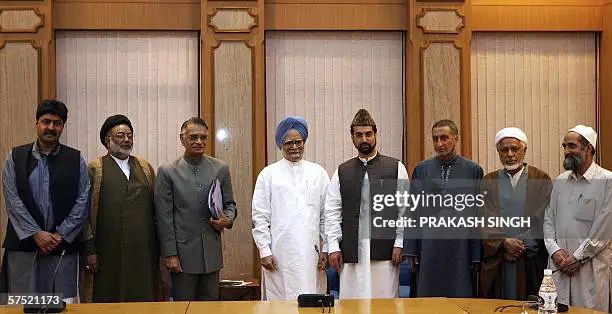
When Bilal Gani Lone, a former separatist leader, recently called out the Hurriyat Conference for its own irrelevance, branding it “non-functional”, he said what many were too afraid to say. It was a bold acknowledgement of failure. And in that admission lies a spark: a chance for collective reckoning.
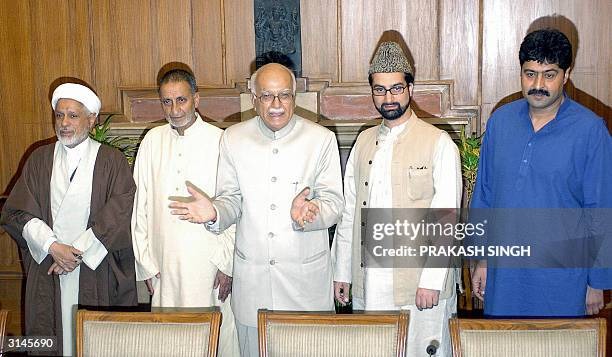
For decades, the Hurriyat claimed to represent the Kashmiri people. But its repeated refusal to engage with democratic processes, its rigid allegiance to an external script, and its detachment from the lived realities of the people have rendered it obsolete. The time has come to let go of the illusion that it will deliver a “solution” from the past. It won’t.
That doesn’t mean the political question of Kashmir has vanished. Far from it. But the path forward demands a new approach, one rooted in empathy, truth, and deep listening. Kashmir is not just a law-and-order problem. It is a human issue. And any durable peace must address the roots of grievance, identity, and alienation.
It must also include the aspirations of the youth, those who have seen more lockdowns than festivals, more bunkers than libraries. This new generation doesn’t want to inherit unresolved conflicts or ideological baggage. They seek dignity, opportunity, and a chance to thrive. Their voices are the most critical stakeholders in any future roadmap.
There are quiet signs of change. More young Kashmiris are engaging with entrepreneurship, civil society work, digital media, and academia. There is greater participation in competitive exams, governance programs, and even electoral processes. These are not small developments. They reflect a longing to be heard not through slogans, but through achievement and contribution.
To harness this shift, the State must go beyond military containment or infrastructure delivery. It must create platforms for dialogue and reconciliation, spaces where memories can be shared and addressed, not erased or suppressed. It must support truth-telling initiatives, empower local governance, and ensure political inclusion at all levels.
Similarly, those who have long claimed to be the “voice of the people” must now introspect. Silence, deflection, or self-preservation will no longer suffice. The people deserve accountability for the lost years, the manipulated emotions, the squandered opportunities.
Reflecting on the past 30 years with clarity will help expose the designs of those who dragged the youth, the vulnerable, and the disenfranchised into unwinnable confrontations. The state’s inconsistency must be acknowledged. The separatists’ abdication of responsibility must be questioned. And above all, the pain of the people must be honoured, not with slogans, but with solutions.
No doubt, it is too late for many things. Too many lives have been lost. Too much trust has been broken. But better late than never.
The voices of reason, those that call for healing, for justice, for dignity, must now be amplified. Kashmir needs an environment where lives are nurtured, not extinguished; where politics is honest, not manipulative; where leadership is accountable, not reactionary.
There is one consensus that cuts across ideology in today’s Kashmir: never again should another generation endure what the last one did. That alone should be our collective north star.
Bilal Lone’s statement may have been the beginning. But Kashmir needs a chorus, a chorus of truth, compassion, and responsibility. It is time for a new politics, one that dares to imagine peace not as a pause between wars, but as a permanent state of dignity and self-worth.
The views and opinions expressed in this Blog Post are those of the author and do not necessarily reflect the official policy or position of JKPI



Leave a Reply
You must belogged in to post a comment.