Introduction
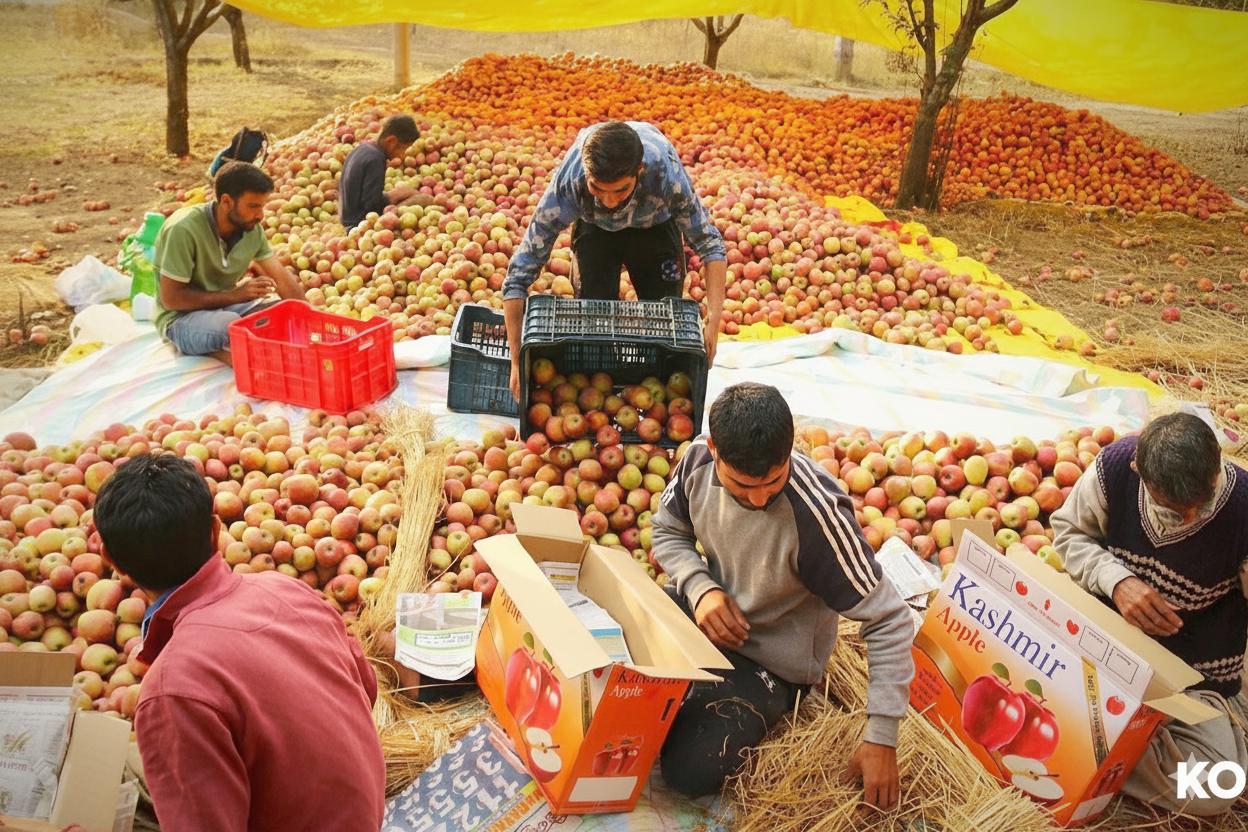
Over the past three decades, the region of Jammu and Kashmir has experienced prolonged political instability and socio-economic turmoil. These decades of uncertainty have significantly impeded the growth and development of various sectors within the region. Despite these disruptions, however, agriculture and its allied activities have continued to serve as a crucial source of livelihood and stability for the local population. In an environment where the prospects of other sectors appear uncertain, agriculture, particularly horticulture, has emerged as a beacon of hope for many unemployed youth and rural households.
Given the increasing engagement of Kashmiris in agricultural and horticultural enterprises, there has been a parallel rise in the need for financial support to adopt modern technologies and sustainable farming practices. Consequently, farmers often turn to formal financial institutions to avail themselves of the benefits offered under the Kisan Credit Card (KCC) Scheme. It is, therefore, essential to critically analyse the implementation of the Kisan Credit Scheme within the specific socio-economic context of Kashmir, with a particular focus on the repayment patterns and utilisation behaviour of farmers.




Leave a Reply
You must belogged in to post a comment.