
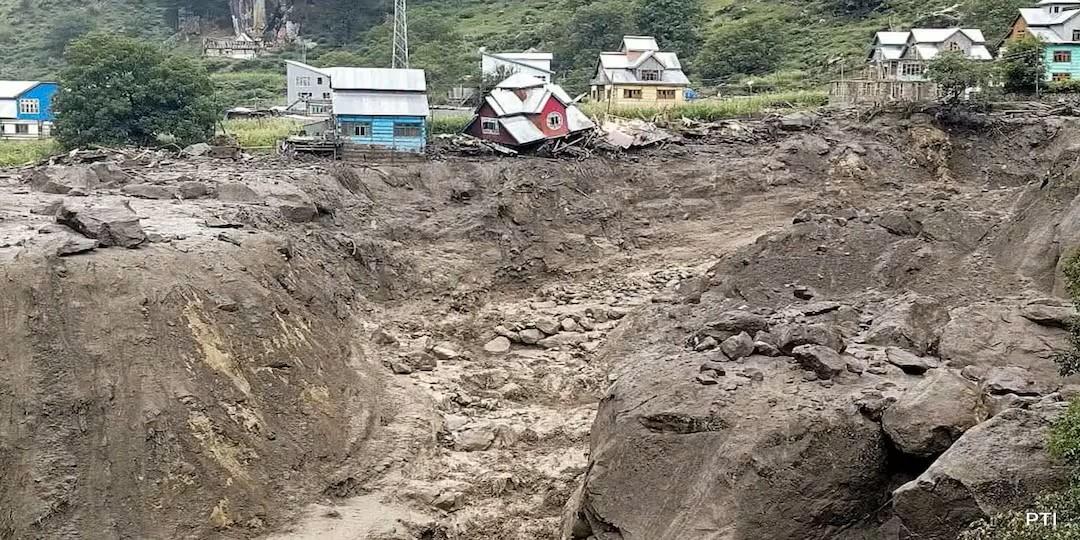
The Himalayas and Hindu Kush are not only geographical barriers. They are living ecosystems, water towers of Asia, and cultural landscapes that support nearly two billion people downstream. But in recent years, the story emerging from these mountains is one of growing anger and distress. Sudden cloudbursts, destructive flash floods, and landslides are no longer rare events. They have become seasonal realities. The tragic images from Kishtwar in Jammu and Kashmir and Dharali in Uttarakhand this August are only the latest additions to a disturbing pattern.
When flash floods swept through Chasoti village in Kishtwar on August 14, 2025, dozens of lives were lost within minutes. Barely ten days earlier, Dharali in Uttarkashi was devastated by what was first called a cloudburst but later suspected to be a glacial lake outburst flood (GLOF). Both events happened despite the fact that rainfall data showed “normal” to “below normal” levels in these districts. This paradox challenges our understanding of risk and exposes the fragility of mountain systems under climate change.
These tragedies are not isolated. Data from the Indian Meteorological Department (IMD) shows that between 2010 and 2022, the region faced 2,863 extreme weather events (EWEs), which killed 552 people. Of these, 119 deaths were due to flash floods, while 111 deaths were due to heavy rainfall events. Districts such as Kupwara and Kishtwar recorded the highest fatalities. This history shows that what we see today is part of a growing and predictable crisis. The big question is: will we finally treat these disasters as warnings that require urgent action, or will we continue to treat them as passing misfortunes?
CLICK HERE TO DOWNLOAD



Leave a Reply
You must belogged in to post a comment.