
Introduction:
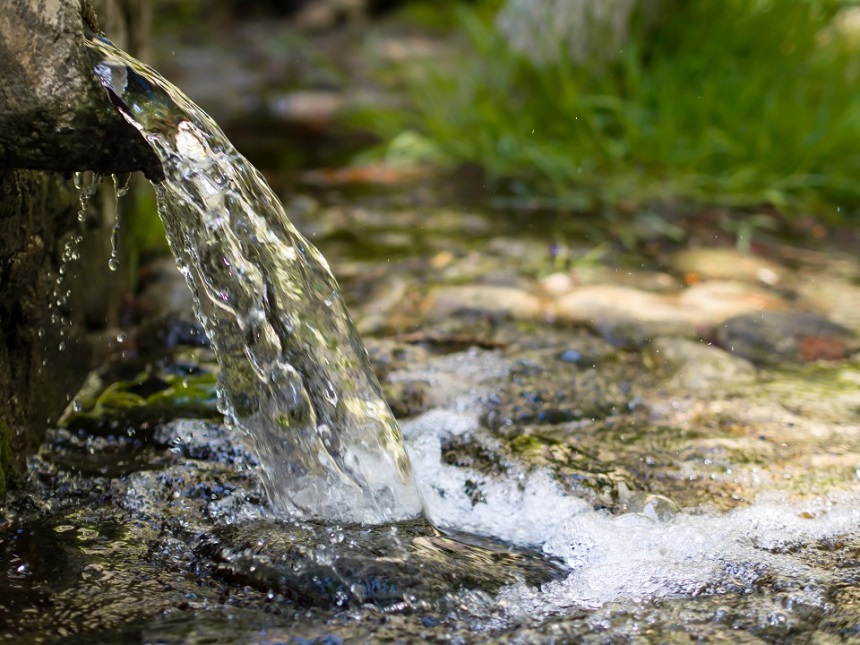
In Kashmir, springs—locally known as Naag—hold sacred, ecological, and economic significance. Historically, Kashmiris have cared for these springs voluntarily, keeping them clean and protecting them from any form of pollution or immoral activity. It was against social norms to engage in any disrespectful behavior near these sites. Villagers, particularly women, would gather at the springs not only to collect water but also to bond and strengthen social ties. These springs served as communal spaces, especially for women.
However, with the advent of urbanization and the widespread installation of tap water connections, people began to turn their backs on these natural sources. Kashmiri society gradually shifted from being eco-sensitive to largely apathetic. This insensitivity has now become ingrained. As a result, many of these once-sacred sites have been reduced to dumping grounds.
Today, Kashmir’s springs stand at a crossroads. Several studies have reported that these springs are drying up at an alarming rate due to climate change and human activities. It is imperative to implement effective and sincere policies to ensure the sustainability of these vital natural resources.
Kashmir Springs:
Around two decades ago, Kashmir’s landscape was dotted with thousands of springs that were vital sources of water and livelihood. However, the exact number of these springs remains uncertain due to the historically limited study and documentation of spring systems. Researchers estimate that nearly 3 million springs exist in the Indian Himalayan Region (IHR), which includes Jammu and Kashmir. These springs provide a critical supply of freshwater for over 200 million people across the region.
In Kashmir, springs are especially crucial for rural communities, supplying 80–90% of drinking and irrigation water. However, the situation has become alarming. According to a 2018 report by NITI Aayog, approximately 50% of the springs in the Himalayan region, including those in Jammu and Kashmir, are drying up. This means that by 2018, half of Kashmir’s springs were either already dry or at high risk of depletion—a trend expected to worsen by 2025 due to persistent environmental stressors such as climate change and unsustainable human activity.
A Few Case Studies of Apathy:
At Kharmahla in Delina, Baramulla district, a spring located along the Srinagar-Baramulla highway once provided drinking water to nearly the entire surrounding area just a couple of decades ago. However, when JKPI assessed its current state, it was found in complete disrepair. Heaps of garbage had engulfed it, turning it into a victim of both public neglect and governmental apathy. A few students from the University of Kashmir’s North Campus, along with some local residents, were still seen fetching water from it, but the foul odors emanating from the surrounding waste made even visiting the site unpleasant and unsafe.
 Similarly, in the village of Chanpora in Khansahib, Budgam, a spring that once supplied drinking water to nearly three dozen villages has suffered severe depletion. Although the Jal Shakti Department had installed pipelines to utilize the spring’s water, a few years ago, the department diverted the supply to the nearby Ahij stream due to a significant drop in the spring’s water level.
A similar situation was observed at Kulinag, located in Hukhlatri village of Beerwah, Budgam, where the spring too has been affected by environmental and administrative neglect.
In Rawalpora village of Khansahib, Budgam, a local spring has nearly dried up. The Rural Development Department constructed concrete walls around it under the NREGA scheme. However, soon after the concretization, the spring stopped flowing altogether. Around the spring, heaps of cow dung could be seen, pointing to public insensitivity and a lack of awareness.
 In Zainapora village of Shopian district—locally known as Varnag—the spring has long been a symbol of syncretic culture and spiritual significance for the region. Yet, over the past few decades, both the water flow and water quality have deteriorated significantly. Locals attribute this decline to rampant encroachment and continued official neglect.
The famous spring in Tral sub-district of south Kashmir, known as ‘Aripal Naag’, has been drying up during winters over the last many years now. ‘Rahim Darun Naag’ in Lam village of the same area has completely dried up. Also, in the Gratbal locality of Rathsuna village, in Tral, once dotted with many fresh water springs and nearly all of them have dried up.
 Lack of Study and Documentation:
 Lack of Study and Documentation:
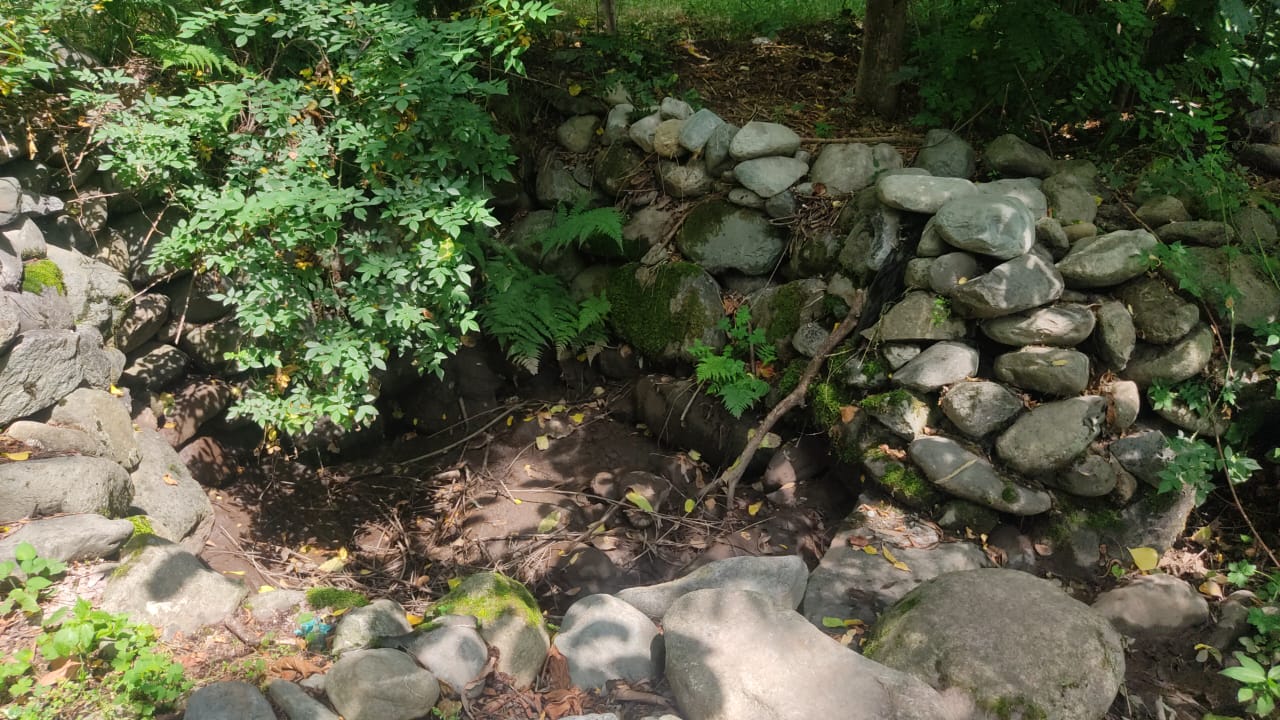
The absence of systematic study and official documentation has likely contributed to the disappearance of springs in Kashmir by impeding effective monitoring and management efforts. In Kashmir, the lack of research and formal records makes it difficult to understand the extent and causes of the crisis involving drying and vanishing springs. Without reliable data and thorough investigations, it is nearly impossible to determine which springs are at risk and why—making it equally difficult for authorities to take timely action.
There is currently no comprehensive registry of springs in Kashmir. Their locations, as well as their hydrological connections to rivers and aquifers, remain largely unmapped due to the absence of formal documentation. This lack of information hampers the regulation of damaging human activities such as illegal mining, deforestation, and unregulated construction in and around spring zones.
The 2017 NITI Aayog report, for instance, highlighted the serious lack of data on spring discharge, which directly affects the planning and implementation of spring conservation efforts in the region.
Without proper documentation, tracking the condition of springs or identifying priority areas for intervention becomes difficult. Many smaller and less visible springs are disappearing unnoticed, as suggested by recurring reports of “hundreds” of springs drying up over the past few decades.
This research gap also affects public awareness. Communities often remain uninformed about the issue, which delays local-level responses. Moreover, national policies like the 2012 National Water Policy fail to adequately address the protection of springs, leaving them largely unrecognized in conservation frameworks. This institutional neglect has likely exacerbated the crisis.
Water Crisis in Kashmir and Springs as a Viable Option:
According to a paper titled “A Critical Appraisal of the Status and Hydrogeochemical Characteristics of Freshwater Springs in Kashmir Valley” published in Nature Scientific Reports, 39.5 percent of the 258 springs studied in the Kashmir Valley have excellent water quality, 47.7 percent have good water quality, 5 percent have poor water, 1.6 percent have very poor water, and 6.2 percent are completely unfit for drinking. In total, around 87 percent of these springs have excellent to good quality water and are suitable for drinking without any treatment. This highlights the significant potential of springs to meet the region’s growing water demands.
However, rapid urbanization, industrialization, human intervention, population growth, and climate change are all threatening the survival of these springs. While the thousands of springs across Kashmir’s landscape could provide sustainable solutions to the region’s escalating drinking water crisis, they must be properly protected and managed.
It is high time the government formally registers all springs—both known and undocumented—and recruits a team of geologists to map their origins, underground aquifers, and flow paths. Technologies such as dye tracing, Electrical Resistivity Tomography (ERT), isotope analysis, and GIS mapping should be employed wherever feasible.
Notably, spring mapping studies have been conducted in parts of Kashmir, but these efforts have not been uniform or comprehensive. Most mapping has been partial, and advanced technologies like ERT or isotope analysis have rarely been used due to limited funding and a shortage of skilled experts.
Although governments have initiated policies, they often lack sustained commitment, proper planning, and accountability. In 2019, the Ministry of Jal Shakti launched the Spring Rejuvenation Program. Under the Jal Shakti Abhiyaan, hydrological mapping and spring-shed management plans were proposed but have largely remained unimplemented.
Unsustainable Spring Management and Recommendations:
The government should manage springs in consultation with local bodies such as gram panchayats and auqaf committees. For instance, in Churmujroo village of Beerwah, women can be seen every evening collecting drinking water from the nearby spring. A similar situation exists in Danas village of Budgam, where residents rely on a spring located in a neighboring village.
Notably, most of these springs emerge in low-lying areas, which makes it essential to use appropriate technology to lift the water to the villages—solar-powered pumping, for example. While the government is spending crores under the Jal Jeevan Mission to provide safe drinking water to households, even a modest intervention—with proper technology and funding—could address drinking water issues in many villages through effective spring management.
Like other natural water sources, springs in Kashmir rely on permeable soils and organic filtering mechanisms for groundwater recharge. However, the construction of concrete structures obstructs the natural seepage of water from nearby aquifers. This reduces recharge rates and, ultimately, the spring’s water output. For example, in Goa, the concretization of water body banks has been observed to disrupt aquatic ecosystems and diminish spring flow. Similar patterns are now being seen in Kashmir.
Over the past decade, large-scale concretization—particularly through NREGA and other schemes—has turned many traditional drains into impermeable concrete channels. This shift has significantly disrupted the natural water flow and recharge systems. Springs depend on groundwater that percolates through permeable surfaces. Concrete drains hinder this process, reducing aquifer replenishment and, consequently, spring flow. It is essential to issue clear guidelines to rural and urban development departments to avoid unnecessary concretization. Concrete drains should only be constructed where absolutely necessary, and even then, the floor portions should remain uncemented to allow infiltration.
Springs typically appear when groundwater rises to the surface through geological cracks or permeable zones. Construction of buildings, roads, or drains near these outlets can block or alter these natural channels. Enclosing a spring’s discharge point with concrete can seal it entirely, stopping the water from surfacing. Heavy construction may compress aquifers or fracture the rock layers, diverting groundwater away from the spring’s original location. Changes in slope, soil compaction, or rerouting of groundwater due to construction can cause springs to shift or vanish. These changes are unpredictable and, in most cases, result in diminished flow or complete loss.
Often, springs are encased in concrete without consulting hydrological experts. In many cases, this process directly leads to the disappearance of springs. To conserve Kashmir’s springs, the government should designate red zones (no-construction zones) around spring sites to protect natural flow paths. Buffer zones with restricted land use should promote permeable surfaces to enable aquifer recharge.
Furthermore, the government must initiate geotagging of springs using GPS and GIS-based databases to monitor their status and prevent encroachment. Legal enforcement of zoning regulations is crucial and should be managed by a dedicated Spring Conservation Authority. Active community participation and the promotion of green infrastructure are key to ensuring long-term sustainability of spring ecosystems.
References
NITI Aayog 2017 Report on Inventory and Revival of Springs in Himalayas https://dst.gov.in/sites/default/files/NITI-Aayog-report-Springs-29Dec2017-FINAL.pdf
A critical appraisal of the status and hydrogeochemical characteristics of freshwater springs in Kashmir Valley. Scientific Reports, 12(1), 5817. https://www.nature.com/articles/s41598-022-09906-2



Leave a Reply
You must belogged in to post a comment.